
Discover financial solutions that protect your future and provide peace of mind. Whether you're exploring annuities, life insurance, or understanding employee benefits through your workplace, Pacific Life offers resources and products designed to meet your personal and family goals.
Support your workforce with innovative employee benefits and retirement solutions. Pacific Life partners with business owners, benefits administrators, and pension fund managers to create customized programs that attract and retain top talent while securing their financial future.
Simplify complex retirement and pension risk management with our tailored solutions for large organizations. Pacific Life specializes in working with institutions to address their unique challenges, offering expertise in pension de-risking and strategic retirement planning for a more secure future.
Empower your clients with confidence by leveraging Pacific Life’s comprehensive portfolio of financial products. From annuities to life insurance, we provide the tools, resources, and support to help financial advisors and brokers deliver exceptional value and long-term results.

-
Individuals
Discover financial solutions that protect your future and provide peace of mind. Whether you're exploring annuities, life insurance, or understanding employee benefits through your workplace, Pacific Life offers resources and products designed to meet your personal and family goals.
-
Employers
Support your workforce with innovative employee benefits and retirement solutions. Pacific Life partners with business owners, benefits administrators, and pension fund managers to create customized programs that attract and retain top talent while securing their financial future.
-
Institutions
Simplify complex retirement and pension risk management with our tailored solutions for large organizations. Pacific Life specializes in working with institutions to address their unique challenges, offering expertise in pension de-risking and strategic retirement planning for a more secure future.
-
Financial Professionals & Brokers
Empower your clients with confidence by leveraging Pacific Life’s comprehensive portfolio of financial products. From annuities to life insurance, we provide the tools, resources, and support to help financial advisors and brokers deliver exceptional value and long-term results.
What Plan Sponsors Should Consider When Evaluating a Pension Buy-In Provider | November 2026

Executive Summary
A pension buy-in can transfer significant investment, interest-rate, and longevity risk while allowing the plan to retain its relationship with participants and preserve flexibility over future decisions. But the value of a buy-in is determined by more than pricing at the transaction date.
The strongest arrangements are designed for the life of the contract: how data will be governed, how accountability will be maintained, how changing sponsor objectives will be accommodated, and how participants will be supported if the arrangement ultimately converts to a buy-out.
As buy-in activity accelerates and insurer approaches evolve, plan sponsors should evaluate not only whether a carrier can underwrite a buy-in, but whether it has the experience, operating discipline, and foresight to support what comes next.
This paper outlines the considerations plan sponsors and their advisors should use in evaluating a buy-in provider, from initial structure and ongoing governance to conversion readiness and participant support.
Four Steps to a Strong Buy-In Arrangement 1. Data Governance 2. Clear Accountability 3. Future Flexibility 4. Participant Support |
I. Choosing a De-risking Path
Plan sponsors (“sponsors”) looking to de-risk are increasingly weighing buy-ins against buy-outs. The right choice starts with their objectives: which risks and responsibilities to retain, and which to transfer to an insurer.
In a buy-in, the plan purchases a group annuity contract that transfers specified investment, interest-rate, and longevity risks to an insurer. The plan remains responsible for administering benefits and continues to serve as the primary point of contact for participants. In a buy-out, responsibility for covered benefits and the participant relationship transfers to the insurer immediately.
| De-Risking Paths: Buy-In Compared to Buy-Out | |
|---|---|
| Buy-in | Buy-out |
| Plan retains participant relationship | Insurer assumes participant relationship |
| Economic risks transfer | Covered benefit responsibility transfers |
| Plan continues administration | Insurer administers covered benefits |
| May provide future conversion flexibility | Immediate transfer |
The distinction creates different strategic uses. A sponsor may use a buy-in to protect funded-status gains while completing the plan-termination process, establish greater liability certainty in advance of a corporate transaction or restructuring, or maintain the buy-in as a longer-term risk-management structure without a predetermined conversion date. A buy-in may also provide flexibility when the desired timing of economic risk transfer differs from the preferred timing of settlement accounting or plan termination.
Choosing well means looking beyond the immediate transaction. Sponsors should also consider how the structure will operate over time, how it will accommodate future decisions, and what would be required if the plan later elects to convert to a buy-out.
This is where experience matters. An experienced insurer working with the plan’s advisors should help the sponsor understand the implications of each path, identify decisions that must be made at inception, and distinguish between flexibility that is preserved by design and flexibility that may require future agreement.
II. A Growing Market Where Experience Matters
Pension buy-ins are becoming a more prominent component of the U.S. pension risk transfer market. In 2025, new buy-in premium totaled $17.5 billion, surging 372% from 2024 sales, and U.S. carriers reported 17 buy-in contracts in 2025, representing a 70% increase year over year.1 As activity has increased, sponsors and their advisors are encountering a broader range of insurer approaches, contract structures, and operating models.
That growth makes provider evaluation increasingly important. The ability to price and issue a buy-in does not by itself demonstrate the ability to operate the arrangement successfully over time or support an orderly conversion if the sponsor later chooses to pursue a buy-out.
Sponsors should ask how the insurer approaches ongoing governance, how accountability is maintained after closing, whether the contract anticipates foreseeable changes in the sponsor's objectives, and how the insurer prepares for a potential conversion to a buy-out. Additionally, sponsors should understand the insurer's experience with buy-out conversions and the support it provides throughout the process.
These considerations matter most when a buy-in is intended to serve as a bridge to plan termination, even if the timing has not yet been determined.
III. Setting Up for Success: Designing for the Life of the Contract
A successful buy-in begins with alignment. Before the transaction closes, the sponsor, its advisors, and the insurer should have a common understanding of responsibilities, governance, information requirements, and the range of potential future outcomes.
That alignment should extend beyond the initial implementation period. A buy-in may remain in place for several years, convert on a defined timetable, or evolve as the sponsor’s objectives change. The operating model and contract should be capable of supporting those possibilities without creating unnecessary uncertainty or disruption.
Sponsors should evaluate whether the insurer can clearly explain how the arrangement will be governed after closing, clear expectations on what each party is accountable for, and how the insurer would prepare for a future conversion.
Data Quality and Ongoing Governance
Data quality affects nearly every aspect of a buy-in, including pricing, implementation, ongoing administration, and participant outcomes. Plans that begin with complete, well-understood data are generally better positioned for efficient transactions and stable ongoing administration.
Data quality, however, is not solely a closing requirement. Participant populations and benefit records continue to change after the transaction. A well-designed buy-in should therefore include a clearly defined governance process for maintaining alignment between the plan’s records and the insurer’s obligations.
To help ensure that governance remains effective throughout the life of the arrangement, sponsors should understand:
|
The goal is confidence that the contract, the plan’s records, and the payments associated with the covered population remain aligned throughout the life of the arrangement.
An experienced provider will demonstrate a disciplined governance model that should still leave room to work effectively with the sponsor, trustee, administrator, and other parties supporting the plan.
| Clear responsibilities → Ongoing alignment → Timely resolution → Confidence over time |
|---|
Why Relationship Continuity Is as Critical as Process Discipline
Strong processes are essential, but they are most effective when supported by continuity in the people responsible for the arrangement.
A buy-in is an ongoing relationship rather than a single closing event. Sponsors should understand who will remain accountable after implementation for each responsibility, how knowledge of the plan will be maintained, and whether the team responsible for ongoing administration will remain connected to any future conversion.
Continuity reduces the risk that the sponsor must repeatedly explain the plan’s history, prior decisions, or unique circumstances. It also supports more informed decision-making when an issue arises or the sponsor’s objectives change.
The operating model should combine consistency with appropriate responsiveness. Sponsors may have different reporting needs, governance schedules, and administrative arrangements, but flexibility should be provided within a disciplined framework that maintains clear responsibilities and effective controls.
Contract Decisions Made Today Shape Future Flexibility
A buy-in contract should be evaluated not only for the protection it provides at inception, but also for how it supports the sponsor’s potential future decisions.
At the outset, sponsors and their advisors should understand which outcomes are addressed within the contract, which decisions remain within the sponsor’s control, and which changes may require future agreement. This is particularly important when a future conversion to a buy-out is possible, even if no conversion date has been established.
To help ensure future flexibility and conversion readiness, sponsors should consider:
|
These considerations should be addressed before execution rather than postponed until the sponsor is approaching a conversion. A contract designed with the full lifecycle in mind can provide greater clarity and reduce the potential for important terms to be reconsidered under time pressure.
An experienced insurer should be able to explain these considerations clearly and help the sponsor understand the practical implications of the contract under a range of potential outcomes.
The Outcome: An Orderly and Predictable Conversion
Conversion should represent the continuation of an established relationship rather than the creation of an entirely new one regardless of when a conversion is inititated.
Conversion readiness begins well before the sponsor makes a final decision. The insurer should maintain sufficient familiarity with the plan, its covered population, and its administrative history to support an orderly transition when the sponsor determines the time is right.
Sponsors should ask prospective insurers to explain:
|
The goal is not simply to complete the conversion. It is to preserve the integrity of the information and decisions developed during the buy-in period while preventing avoidable disruption for the sponsor and participants.
The quality of a future conversion often reflects choices made at the beginning of the buy-in. That makes conversion readiness an important consideration when selecting the insurer, not a topic to address only when conversion becomes imminent.
| Questions to Answer Before Conversion: |
|---|
☐ Is the participant and benefit data complete and sufficiently understood? ☐ Have all relevant plan provisions been incorporated? ☐ Is there a clear process for communicating data changes? ☐ Have the appropriate stakeholders been engaged? ☐ Are responsibilities clear after the transaction closes? ☐ Have reporting and service expectations been established? ☐ Has the sponsor considered potential future outcomes? |
IV. Supporting Participants Through Conversion
The work performed throughout a buy-in ultimately serves one central objective: protecting participants’ benefits and supporting a consistent experience if responsibility for those benefits transfers to the insurer.
A conversion should be designed so participants understand what is changing, what is not changing, and where they can obtain assistance. Communications from the sponsor and insurer should be coordinated, clear, and appropriately timed.
Before participant communications begin, the insurer’s service organization should be prepared to support the specific plan and covered population. That preparation should include an understanding of the benefits being transferred, the communications participants will receive, and the process for addressing questions or issues.
To help ensure a consistent and well-supported participant experience, sponsors should evaluate:
|
A well-executed conversion is not defined by the absence of participant questions. It is defined by whether participants receive timely, accurate answers, whether issues are resolved effectively, and whether avoidable disruption is minimized.
Participant support also extends beyond the initial transition. At conversion, the plan’s participants become the insurer’s annuitants. The insurer should continue investing in service capabilities that make it easier for annuitants to access information, manage routine needs, and obtain assistance over the life of the contract.
The most effective participant experience is therefore not a separate step at the end of the transaction. It is the outcome around which the buy-in, its administration, and any future conversion should be designed from the beginning.
| Understand → Transition → Receive support → Build confidence |
|---|
V. Conclusion
Sound data governance, clear accountability, thoughtful contract design, relationship continuity, conversion readiness, and participant-centered service each contribute to an arrangement that can perform as intended over time.
An insurer that understands the breadth of objectives of a buy-in and how those objectives might change over time can help the sponsor anticipate future decisions, preserve appropriate flexibility, and prepare for a potential conversion without losing the knowledge developed during the buy-in period.
Sponsors should look for a partner whose experience is evident not only in the transaction it can execute today, but also in the outcomes it is prepared to support over the full life of the arrangement.
Ultimately, the standard should be straightforward: a structure that supports the sponsor’s objectives, an operating model that inspires confidence, and an experience that protects the people whose retirement benefits are at the center of the transaction.
If you would like to discuss how these considerations may apply to your specific situation, Pacific Life's Pension Risk Transfer team would welcome the opportunity to continue the conversation.
Insights on Pension Buy-Ins
Pension Risk Transfer / Thought Leadership
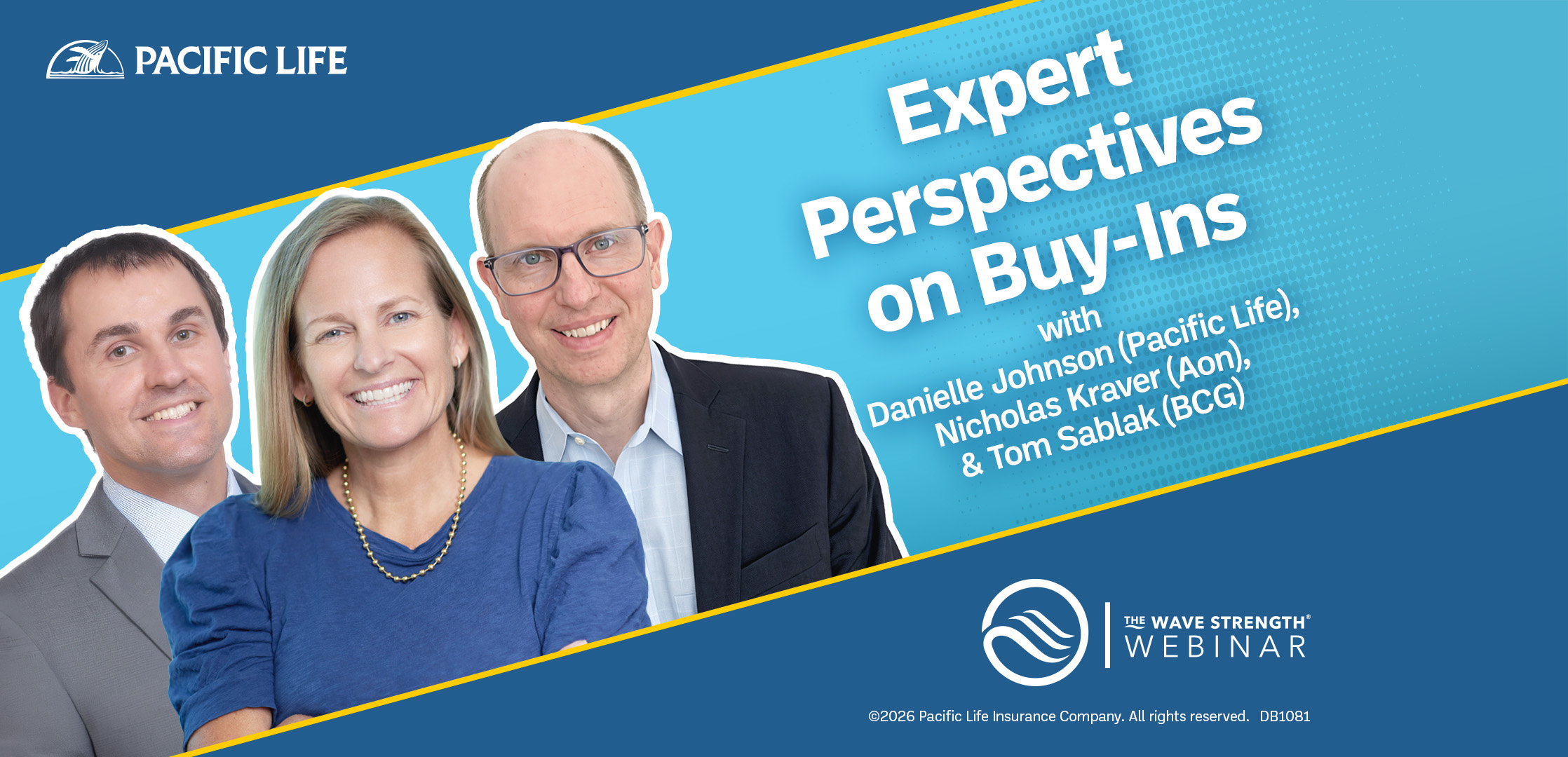
Webinar: Expert Perspectives on Buy-Ins
Hear perspectives on the factors driving increased adoption, how buy-ins may help transfer pension risk, and considerations for implementation.

Pension Risk Transfer / Thought Leadership
The Rise of the Pension Buy-In
A Maturing Tool—and a New Strategic Lever—for U.S. Plan Sponsors
Pension Risk Transfer / Defined Contribution Lifetime Income
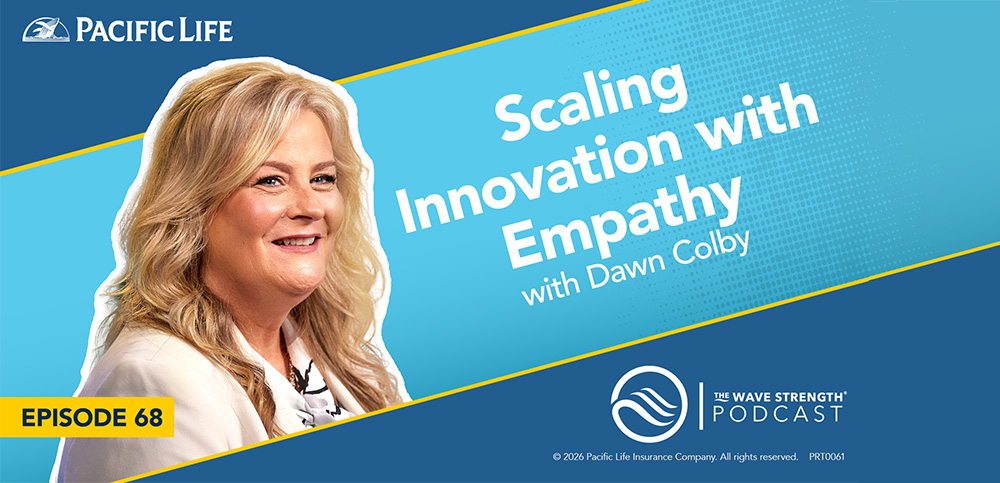
Scaling Innovation with Empathy
The power of engaged leadership, investment in talent, and the unique advantage of bringing DB and DCLI solutions together under one leadership team, creating a more integrated approach to retirement outcomes


1 “LIMRA: U.S. Single Premium Pension Risk Transfer Product Sales Jump 132% in the Fourth Quarter of 2025.” LIMRA. March 18, 2026. https://www.limra.com/en/newsroom/news-releases/2026/limra-u.s.-single-premium-pension-risk-transfer-product-sales-jump-132-in-the-fourth-quarter-of-2025/
About Pacific Life
Pacific Life provides a variety of products and services designed to help individuals and businesses in the retail, institutional, workforce benefits, and reinsurance markets achieve financial security. Whether your goal is to protect loved ones or grow your assets for retirement, Pacific Life offers innovative life insurance and annuity solutions, as well as mutual funds, that provide value and financial security for current and future generations. Supporting our policyholders for more than 150 years, Pacific Life is a Fortune 500 company headquartered in Newport Beach, California. For additional company information, including current financial strength and ratings, visit www.PacificLife.com.
Stay up to date on the latest news and opportunities in Pension Risk Transfer by following Pacific Life’s Institutional Business on LinkedIn.
Pacific Life is a product provider. It is not a fiduciary and therefore does not give advice or make recommendations regarding insurance or investment products. Pacific Life, its affiliates, its distributors, and respective representatives do not provide any employer-sponsored qualified plan administrative services or impartial advice about investments and do not act in a fiduciary capacity for any plan.
This material is provided for informational purposes only and should not be construed as investment, tax, or legal advice. Information is based on current laws, which are subject to change at any time. Clients should consult with their accounting or tax professionals for guidance regarding their specific financial situations.
Pacific Life refers to Pacific Life Insurance Company and its affiliates, including Pacific Life & Annuity Company. Insurance products can be issued in all states, except New York, by Pacific Life Insurance Company or Pacific Life & Annuity Company. In New York, insurance products are only issued by Pacific Life & Annuity Company. Product availability and features may vary by state. Each insurance company is solely responsible for the financial obligations accruing under the products it issues.
The home office for Pacific Life & Annuity Company is located in Phoenix, Arizona. The home office for Pacific Life Insurance Company is located in Omaha, Nebraska.
DB-1137-1026